Why every circuit races differently
Two tracks of the same length can produce completely different races. The reason is rarely the corners themselves — it is what the layout does to overtaking, to tyres and to the margin for error.
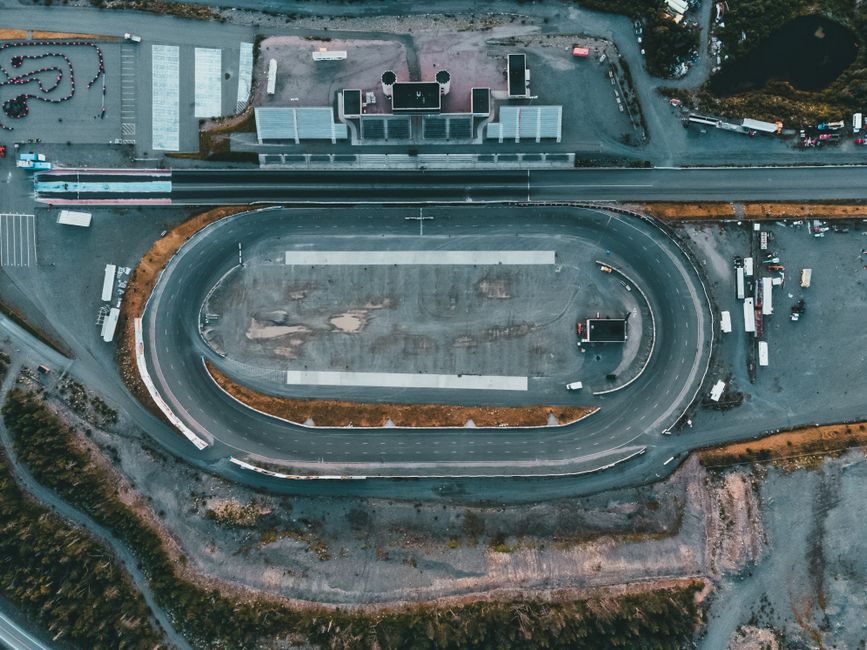
Drivers talk about circuits having a character, which sounds like romance until you look at the lap data. A track's shape decides how close cars can run, how long tyres last and whether a mistake costs you half a second or your afternoon. Those three things decide the race.
Street against permanent
| Street circuit | Permanent circuit | |
|---|---|---|
| Run-off | Walls, immediately | Gravel or tarmac |
| Surface | Public road, bumpy, dirty early on | Purpose-laid, consistent |
| Grip over a weekend | Improves a lot as rubber goes down | Improves slightly |
| Cost of a mistake | Race over | Lost time |
| Overtaking | Rare, usually under braking | More available |
The wall is the whole difference. On a permanent circuit a driver can explore the limit and find it by going slightly beyond. On a street circuit finding the limit that way ends the session, so drivers approach it from underneath — which is slower, and which is why street circuits reward experience far more than raw pace.
Fast against technical
A fast circuit — long corners, few heavy braking zones — puts the load on aerodynamics and on tyres, which spend the lap sliding gently rather than being abused in bursts. Cars run close behind each other badly here, because following disturbs the airflow exactly where a fast corner needs it.
A technical circuit — slow corners, hard braking, short straights — rewards mechanical grip and traction. Following is easier, braking zones give somewhere to attack, and the racing is usually better even though the lap times look unimpressive.
The useful rule: if the layout has at least one long straight ending in a slow corner, there will be overtaking. If it does not, the race will be decided on strategy and on the first lap, no matter how good the drivers are.
Elevation changes everything it touches
Circuits built across hills behave differently from flat ones in ways that do not show up on a map. A corner taken downhill arrives faster than the driver expects and the car has less grip when it gets there, because weight has shifted forward off the rear. Uphill braking zones are shorter than they look. Blind crests make drivers commit on memory rather than sight, which is why tracks with them are so highly rated by people who drive them and so confusing to watch on television.
What this means for your first track day
Start on a permanent circuit
Run-off is not a luxury when you are learning where the limit is.
Prefer a technical layout
Lower speeds, more corners per lap, more learning per pound spent.
Walk it first
Half an hour on foot teaches you more about camber and kerbs than three sighting laps.
Ask about the surface
A resurfaced track behaves nothing like it did last season, and old advice will mislead you.
Why the same track changes through a weekend
Grip goes up as rubber is laid down, then collapses the moment it rains and takes hours to come back. Track temperature moves the tyre working range around, so a setup that was right at nine in the morning is wrong by two in the afternoon. This is why times tumble late in qualifying and why nobody takes Friday pace seriously.
If you are new to the structure of a weekend, read how a race weekend is built first; for choosing an event to attend, the track days guide covers run groups and what you actually need to bring.