How fans abroad reach a betting market
In Britain, following the odds on a race weekend means opening an app and tapping a card. In a lot of the places where motorsport audiences are growing fastest, none of that is available, and the route to a market looks nothing like it.
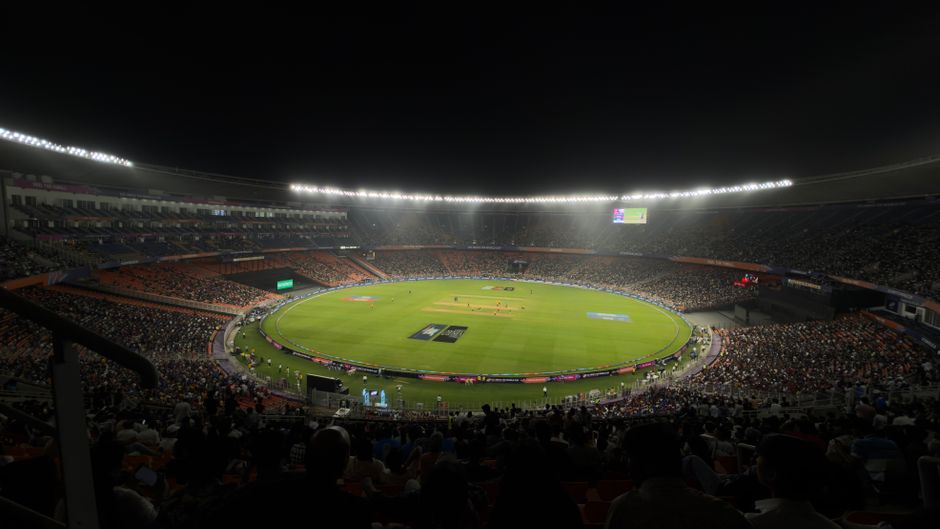
This is worth understanding even if you never place a bet outside your own country, because it explains something otherwise puzzling about the sport's commercial map. Audiences are climbing fastest in South and South-East Asia, and the machinery that follows an audience — sponsorship, broadcast rights, betting markets — has had to improvise to get there.
Three situations, not two
People discuss betting abroad as though it were either legal or illegal. In practice there are three states, and the middle one is where most of the world actually lives.
| Situation | How a fan reaches a market | Where you see it |
|---|---|---|
| Open and licensed | Domestic operator, card or bank transfer, a regulator to complain to | UK, most of the EU, Australia |
| Licensed but walled off | Permitted for some people or some venues and not others | Egypt, several US states until recently |
| Served from outside | Offshore operator, a local person handles the money | Much of South Asia |
The third row is the interesting one. The operator holds a licence somewhere — Curaçao, Malta, the Isle of Man — and takes customers from a country whose own banks will not process the payment. Something has to bridge that gap, and what bridges it is a person.
Why agents exist
An agent is a local cashier. The customer hands over cash, or sends a mobile-wallet transfer, and the agent credits the account from their own float. Withdrawals run the same way in reverse. No card touches the operator, no bank sees a gambling transaction, and the whole arrangement rests on the agent's standing in a neighbourhood or a messaging group.
If that sounds informal, it is. It is also large, and it has been formalised further than you would expect: agents are recruited, ranked, given commission tiers and cut off for bad behaviour. The result looks less like a betting shop and more like a mobile-money network, which is essentially what it has become.
Where the banks will not carry the money, a person does. That one fact explains most of what looks strange about betting outside Europe.
South Asia is the clearest example
Bangladesh is the case most often written about, partly because cricket makes the audience so large and partly because the mechanics there are unusually well documented. Offshore operators compete through local agents and through public partner programmes — affiliate schemes that pay a share of revenue to whoever brings the customer in. MCW runs the most visible of them, and the material written for mcw affiliate recruits describes the cash-in and cash-out chain in far more practical detail than any regulator's report does.
Two things follow for anyone reading the market from outside. Published figures for how big these markets are can only be estimates, because the transactions never appear in the banking data. And consumer protection is whatever the operator chooses to offer, because locally the activity is not licensed at all — there is no domestic body to appeal to.
What this means if you follow racing from abroad
A licence is not your protection
A Curaçao licence tells you the company exists. It does not give you a complaints route in the country you are sitting in.
Agent risk is real risk
If the money passes through a person, that person can keep it. Reputation is the only security on offer.
Friction going in predicts friction coming out
If depositing needs three workarounds, withdrawing will need four. That asymmetry is not an accident.
Their law is not your law
Legal where the operator is registered says nothing about legal where you are.
The same rule applies everywhere. Decide in advance what this is worth to you as entertainment, treat it as a cost like a race ticket, and stop when that is spent. The harder money is to move in and out, the easier it is to lose track of how much has moved.
FAQ
Why do offshore operators bother with countries that will not bank them?
Audience size. A market with tens of millions of sports followers justifies the cost of building an agent network, even on thin margins.
Is using an agent illegal for the customer?
It depends entirely on the country, and in several the governing law predates online activity and does not clearly address it. That ambiguity is not the same thing as permission.
Does any of this reach motorsport itself?
Indirectly, but visibly. Betting money follows audiences and sponsorship follows betting money, which is why operator branding now appears on cars and circuits in series that were once funded entirely by manufacturers.
For how the odds themselves are built, start with motorsport and betting; for the shape of the weekend those markets price, how a race weekend is built covers the sessions.